


If you’re searching in Mansfield, Ohio for addiction treatment resources, you’re already doing one of the hardest things: trying to figure out what comes next.
When a situation at home has gotten serious, you have options in North Central Ohio, ranging from local counseling services to residential programs. The Bluffs, in Sherrodsville, Ohio is about an hour and a half away and offers Mansfield residents the right level of care for addiction treatment.
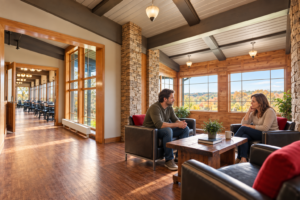
The clinical staff at The Bluffs works with people experiencing severe substance use and the presence of co-occurring mental health conditions on its 80-acre campus with scenic views and the perfect place to get away from your triggers.
Key Takeaways
- Residential treatment removes a person from their home environment (often where triggers and substances are most accessible).
- Medically supervised detox is necessary before residential treatment for alcohol and certain other substances. It is not the same as treatment.
- Insurance, including Ohio Medicaid, frequently covers residential addiction treatment. Verification takes minutes.
- Distance from home can be an asset in early recovery, not a drawback.
Understanding Your Addiction Treatment Options in Ohio
Ohio has more treatment infrastructure than most people realize. The challenge isn’t that options don’t exist. The gap is knowing what each level of care actually does and which one fits the situation in front of you.
Residential (Inpatient) Treatment
Residential treatment means living at the facility, typically for 28 to 90 days, while receiving therapy, group programming, medical oversight, and structured daily support. It’s the most intensive setting outside of a hospital. For people with moderate to severe substance use disorder, or for those who have tried outpatient approaches and continued to relapse, residential treatment removes daily access to substances and the environmental cues that make early recovery so difficult.
Programs that address trauma and co-occurring mental health conditions alongside the addiction, rather than treating the substance use in isolation, tend to produce better long-term outcomes. This isn’t incidental. For most people, addiction is the surface and something else is underneath.
Medically Assisted Detox
Detox and treatment are not the same thing, though they’re often conflated. Detox is the process of safely clearing substances from the body under medical supervision. For alcohol dependence and benzodiazepine use, withdrawal can be medically serious and should not happen without clinical oversight.
Detox addresses physical dependence. It does not address the psychological patterns, trauma history, or behavioral habits that drive use. A good residential program either provides detox on-site or coordinates a medically supervised transition from a detox facility directly into residential care.
Detox vs. Residential Treatment: What’s the Difference?
| Detox | Residential Treatment | |
| What it does | Clears substances from the body under medical supervision | Addresses psychological, behavioral, and trauma roots of addiction |
| Duration | 3–10 days, typically | 28–90+ days |
| Who needs it | Anyone with physical dependence (especially alcohol, benzos) | People with moderate to severe substance use disorder |
| Is it a treatment? | No. It’s a starting point. | Yes. This is where recovery work happens. |
| Can it be done alone? | No. Medical supervision is required. | No. A structured, residential setting is essential. |
What to Look for in a Treatment Program
A few questions worth asking any program you’re considering:
- Does treatment address co-occurring mental health conditions alongside substance use, or just the substance use?
- Is the treatment plan individualized, or does every person follow the same curriculum?
- What therapeutic modalities are used, and are those clinicians licensed?
- What does aftercare planning look like? What happens on day 31?
- Is the program accredited by The Joint Commission or CARF?
Navigating Insurance and Paying for Treatment
The Mental Health Parity and Addiction Equity Act requires most insurance plans to cover substance use disorder treatment on the same basis as physical health conditions. In practice, many residential programs are covered, though pre-authorization requirements and in-network limitations vary.
Ohio’s Medicaid program covers addiction treatment services, and the state’s Medicaid expansion has made residential treatment accessible for many people who previously had no coverage. Don’t assume treatment is unaffordable before checking. A single phone call to an admissions team can clarify what’s actually covered.
| Not sure what your plan covers? The Bluffs admissions team can verify your insurance benefits in a few minutes, with no commitment required. Call us at 330-919-9228 to check your coverage. |
What Makes Someone Ready for Residential Treatment?
The honest answer is that waiting for someone to be “fully ready” often means waiting too long. Readiness is rarely a single clear moment. It’s usually a window, opened by a health scare, a legal issue, or a conversation that finally landed differently.
Certain situations make residential treatment especially appropriate. You can use this as an informal guide:
- The person has tried to stop or cut back repeatedly and hasn’t been able to.
- Outpatient treatment hasn’t held.
- There’s daily or near-daily use affecting work, health, or family.
- The home environment is one where substances are easily accessible.
- There’s a co-occurring mental health condition (depression, anxiety, trauma history) that’s been untreated.
- Medical withdrawal risk is present, particularly with alcohol or benzodiazepines.
- The person has expressed any willingness to get help, even briefly.
If you’re reading this about someone you love, you don’t have to wait until things get worse to start asking questions. And if you’re reading this about yourself: the fact that you’re here suggests you already know something has to change.
If you’re recognizing these signs in yourself or someone you love, a conversation with The Bluffs admissions team can help you understand what comes next. No pressure, no commitment.
How The Bluffs Serves Clients from the Mansfield Area
The Bluffs is a residential treatment center in Sherrodsville, Ohio, in Tuscarawas County, about 90 minutes southeast of Mansfield, set on a former golf club property in the rolling hills of Eastern Ohio. Clients come from across the region: Cleveland, Columbus, Pittsburgh, and communities throughout North Central Ohio including Richland County.
The Drive to Sherrodsville: Distance as Part of the Process
Ninety minutes isn’t far. But it’s far enough. The distance from Mansfield to Sherrodsville means arriving somewhere genuinely separate from the people, places, and routines that have been wrapped up in the substance use. That separation isn’t logistical inconvenience. It’s part of how recovery begins. The hills outside Atwood Lake have a way of quieting the noise that makes early sobriety so hard.
Recovery requires space: room to think clearly, to be honest, to do difficult work without constant reminders of what’s waiting at home. Getting that space sometimes means getting some miles between you and your regular life.
What Treatment Looks Like at The Bluffs
Treatment at The Bluffs is individualized. Each client’s plan is built around their history, not a standard curriculum everyone walks through. Trauma work is central to the clinical model, because substance use disorder rarely exists without underlying pain, and treating the surface without the roots is what leads to relapse.
Programming includes individual therapy, group therapy, family involvement where appropriate, and medical oversight. Large rooms, wooded grounds, chef-prepared meals. Not a resort, but a setting that was built for people who need to slow down and pay serious attention to themselves. The clinical staff has seen this before, and they approach each person with both rigor and genuine care.
The Bluffs doesn’t promise transformation. What it offers is structure, skilled clinicians, and enough distance from daily life for the work to actually happen.
Other Addiction Treatment Resources Near Mansfield, OH
State and Community Resources
For people in the Mansfield area who need a starting point, several local and statewide resources are available:
- OhioMHAS (Ohio Mental Health and Addiction Services) maintains a statewide treatment locator at mha.ohio.gov, searchable by county and level of care.
- Richland County’s Project DAWN offers naloxone (Narcan) distribution and overdose prevention resources.
- SAMHSA’s National Helpline (1-800-662-4357) provides 24/7 free, confidential referrals to treatment facilities and support groups nationwide.
When Local Resources Aren’t Enough: What Comes Next
Local services do important work, but they’re not always sufficient for moderate to severe substance use disorder. If someone has been cycling through community programs, relapsing repeatedly, or is in a home environment where substances are present daily, a local outpatient program may not provide the structure or separation the situation requires.
That’s when residential treatment becomes the appropriate next step, not a last resort, but the level of care that actually matches the severity of what’s happening. A 90-minute drive from Mansfield to Eastern Ohio is a reasonable trade for a real chance at sustained recovery.
Frequently Asked Questions
What types of addiction treatment are available near Mansfield, Ohio?
Mansfield and Richland County have access to community behavioral health services, local outpatient programming, and crisis resources. For residential (inpatient) treatment, most options are 60–90 minutes away in Central or Eastern Ohio, where programs like The Bluffs provide structured, clinical care in a setting designed for serious recovery work.
Does insurance cover residential addiction treatment in Ohio?
Yes, in most cases. Federal parity laws require most insurance plans to cover substance use disorder treatment on the same terms as physical health care. Ohio Medicaid also covers residential treatment for eligible individuals. Coverage details vary, so verification is always worth doing before assuming treatment is out of reach.
How can I check whether my insurance covers rehab?
Call the member services number on the back of your insurance card, or contact a treatment center’s admissions team directly. The Bluffs can verify benefits quickly at no cost or commitment. It’s one of the first things the admissions team helps with.
What’s the difference between detox and residential rehab?
Detox addresses physical withdrawal from substances under medical supervision. It’s a necessary first step for people with physical dependence on alcohol or certain other substances, but it’s not a treatment. Residential rehab is where the therapeutic work happens: addressing the psychological patterns, co-occurring conditions, and trauma history that drive substance use.
How far should someone travel for addiction treatment?
As far as necessary to get into the right program. Distance from home reduces access to substances and familiar environmental cues during early recovery. For many people, geographic separation is an asset, not an obstacle. A 90-minute drive from Mansfield to Sherrodsville is a short trip that creates meaningful space.
How do I help a family member who won’t admit they have a problem?
Start by gathering information, understanding what treatment looks like and what options are available, so you’re prepared when a window opens. SAMHSA’s free helpline can connect you with guidance and local referrals. A professional interventionist may be worth considering if the situation feels stuck. You can’t force someone into recovery, but you can be ready when they’re willing.
What should I look for when choosing a rehab program in Ohio?
Look for individualized treatment planning (not a one-size curriculum), licensed clinical staff, program accreditation through The Joint Commission or CARF, integrated mental health treatment, and a clear aftercare plan. Ask about the staff-to-client ratio. Ask what a typical day looks like.
Why would someone from Mansfield choose a treatment center that isn’t local?
Because proximity to home can be a liability in early recovery. Being close to familiar people, places, and patterns connected to substance use makes the first weeks harder. A residential program 90 minutes southeast of Mansfield in Tuscarawas County provides genuine separation while keeping a person within reach of family, for when that involvement becomes part of treatment.
Ready to Take a First Step?
Call The Bluffs admissions team at 330-919-9228 to speak with the admissions team. There, you can learn about what treatment options are available to you, verify your insurance and get started on your path to recovery.
The Bluffs is located 2650 Lodge Road SW, Sherrodsville, Ohio.
Helpful Links
If you or someone you know is in crisis, these services are free, confidential, and available 24 hours a day:
- SAMHSA National Helpline: 1-800-662-HELP (4357)
- National Suicide Prevention Lifeline: 988
- Crisis Text Line: Text HOME to 741741
- National Institute of Health: Efficacy of Long-term Residential Treatment
- Recovery Research Institute: What is the Evidence for Residential Treatment
- Psychology Today: Co-occurring Disorders
- Mayo Clinic: Drug Addiction
- Center For Alcohol and Addiction Studies