




Promethazine is a prescription medication commonly used to treat nausea, motion sickness, and allergy symptoms. However, its potent sedative properties have made it a popular drug despite the known dangers of promethazine abuse. Acros Ohio and the rest of the country, promethazine has become a public health concern, often appearing in the form of “lean” or “purple drank.”
Promethazine can cause serious physical and mental health issues. From slurred speech and confusion to life-threatening respiratory depression, we go over the dangers of promethazine abuse. At The Bluffs, we provide comprehensive addiction treatment in Ohio for individuals struggling with sedative and polysubstance use, forging a safe path to recovery.
What Is Promethazine and Why Do People Misuse It?
Promethazine belongs to a class of drugs known as first-generation antihistamines. It works by blocking histamine receptors in the body, which helps alleviate allergic reactions and nausea. Unlike newer antihistamines, promethazine easily crosses the blood-brain barrier. This allows it to act directly on the central nervous system, leading to its primary side effect: intense sedation.
Struggling with Promethazine or other substances? Get help today.
Medical Uses vs. Recreational Use
Doctors prescribe promethazine for several specific conditions. It is highly effective at preventing vomiting after surgery or during pregnancy, and it can help manage severe hay fever or hives. In some clinical settings, it is used as a sedative before medical procedures to help patients relax.
Recreational misuse occurs when individuals take the drug in higher doses than prescribed or without a medical need to achieve a state of euphoria or extreme relaxation. Some users also misuse it to experience delirium or hallucinations. Because it is a central nervous system depressant, the “high” is characterized by a heavy, lethargic feeling that many find appealing as a way to escape stress or anxiety.
The ‘Lean’ or ‘Purple Drank’ Phenomenon
The most common form of promethazine abuse involves a mixture known as “lean,” “purple drank,” or “sizzurp.” This typically consists of prescription-strength cough syrup containing both promethazine and codeine mixed with flavored soda and hard candy. The drink originated in the southern United States and gained popularity through mentions in hip-hop culture.
Promethazine acts as a potentiator in this mixture, meaning it intensifies the sedative and euphoric effects of the codeine, which is an opioid. This combination is particularly dangerous because both drugs slow down the central nervous system. Using lean can quickly lead to a “leaning” posture, slurred speech, and impaired motor skills, which is where the drug gets its name.
How Promethazine Affects Your Body and Brain
Promethazine impacts the brain by interfering with several neurotransmitters, including dopamine, serotonin, and acetylcholine. While this interference helps stop nausea, it also disrupts the normal functioning of the brain’s reward and motor systems.
Short-Term Effects
Even in small doses, promethazine can have a powerful impact on physical and mental clarity. Common short-term promethazine side effects include:
- Extreme drowsiness or inability to stay awake
- Slurred speech and blurred vision
- Dizziness or loss of physical coordination
- Rapid or irregular heartbeat
- Confusion and disorientation
- Nausea or vomiting
For those using the drug recreationally, these effects can lead to frequent accidents, falls, or an inability to perform daily tasks safely.
Why the Sedative Effect Feels Appealing (and Why It’s Dangerous)
The heavy sedation caused by promethazine can feel like a “mood-boosting” escape for someone facing a stressful day. It slows down thoughts and produces a sense of detachment from reality. However, this appeal is exactly what makes the drug so hazardous.
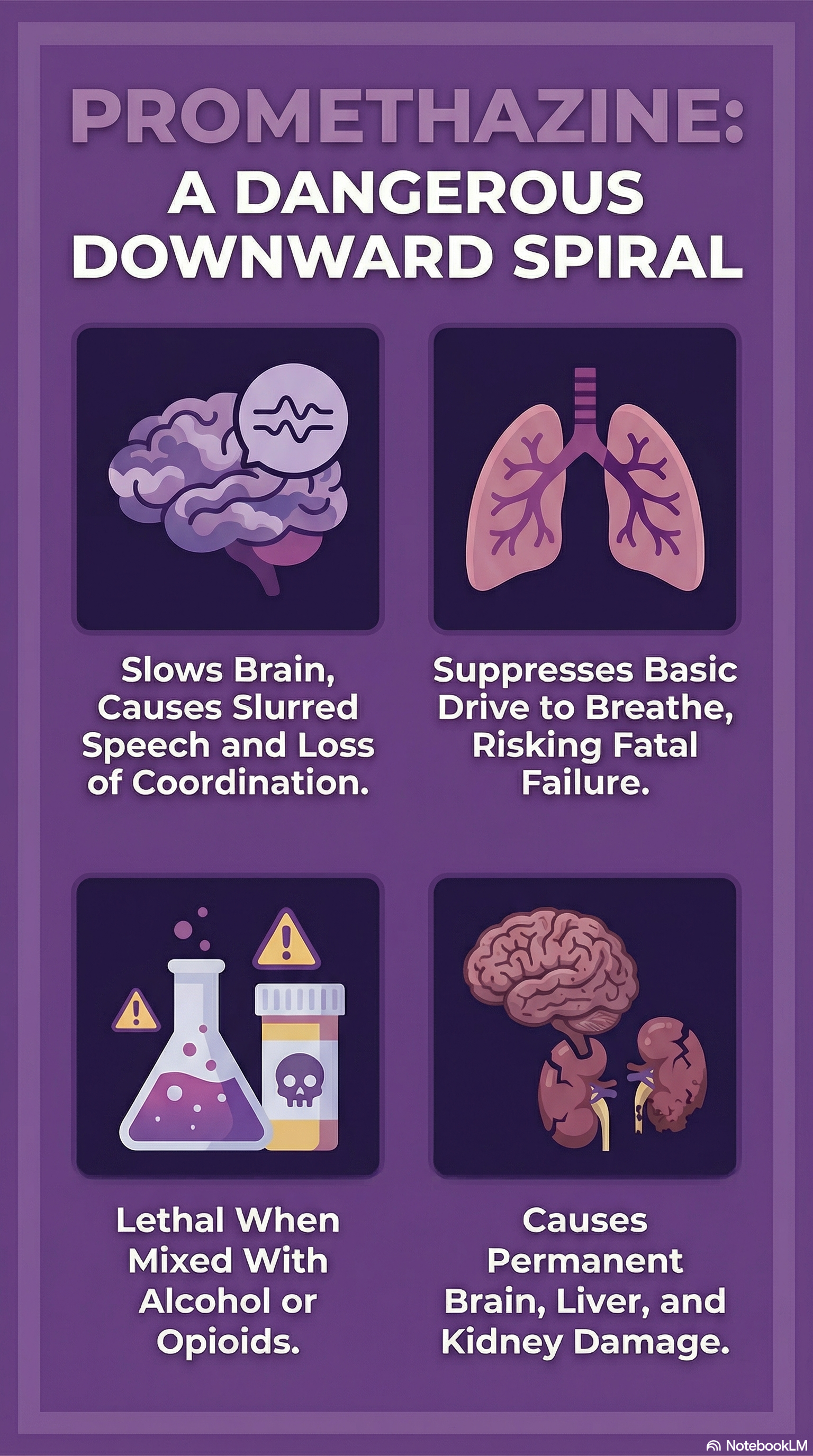
The same mechanism that provides a sense of calm also suppresses the brain’s drive to breathe. As users build a tolerance, they require larger doses to feel the same level of relaxation. Increasing the dose brings them dangerously close to the threshold where the body can no longer sustain basic life functions, such as heart rate and respiration.
The Real Dangers of Promethazine Abuse
Promethazine misuse is rarely a safe or stable habit. The risks increase exponentially when the drug is taken in high doses or used consistently over time.
Respiratory Depression and Overdose Risk
The most lethal risk of promethazine abuse is respiratory depression. Because the drug is a central nervous system depressant, it can slow a person’s breathing to a point where the brain and heart do not receive enough oxygen. This can lead to a coma or fatal respiratory failure.
Overdose symptoms often include extreme agitation, hallucinations, muscle stiffness, and seizures. If someone survives a promethazine overdose, they may still face lasting damage to their organs or brain due to the lack of oxygen during the event.
Combining Promethazine with Other Substances
Promethazine is frequently used alongside other substances, which significantly elevates the danger.
- With Opioids: As seen in lean, mixing promethazine with codeine or other opioids like oxycodone increases the risk of fatal respiratory failure.
- With Alcohol: Alcohol is also a depressant. Combining it with promethazine can cause a person to lose consciousness or stop breathing much faster than they would with either substance alone.
- With Benzodiazepines: Mixing sedatives can lead to severe cognitive impairment and an increased likelihood of a life-threatening overdose.
Long-Term Dangers of Promethazine Abuse
Chronic misuse of promethazine can lead to permanent health issues. Over time, the drug can damage the liver and kidneys as they struggle to filter toxic levels of the medication. Many long-term users experience cognitive impairment, including persistent memory loss and difficulty concentrating.
Psychologically, long-term abuse often leads to the development of mental health disorders such as chronic anxiety or depression. The brain becomes reliant on the drug to regulate mood, making it difficult for the individual to feel “normal” without it.
If you are recognizing these patterns in yourself or someone you care about, a confidential assessment can help you understand what’s happening and what options exist. You don’t need to have all the answers before reaching out.
Signs Promethazine Use Has Become a Problem
Recognizing the signs of promethazine addiction early can save a life. Because the drug is a prescription medication, some people mistakenly believe it is “safer” than illicit drugs. However, the behavioral and physical changes are often quite clear to those close to the individual.
Common signs of a problem include:
- Behavioral Changes: Neglecting work, school, or family responsibilities to use the drug.
- Secretive Behavior: Hiding cough syrup bottles or visiting multiple doctors to get new prescriptions.
- Physical Decline: Chronic fatigue, a shuffling walk, or frequent uncontrolled muscle movements.
- Social Isolation: Withdrawing from long-term friends and hobbies in favor of using the drug alone or with new social circles.
- Withdrawal Symptoms: Feeling irritable, anxious, or unable to sleep when they stop taking the drug.
If a loved one frequently appears “nodding off” or has slurred speech without a clear medical reason, it may be time to look for help.
Getting Help for Promethazine Dependence in Ohio
Recovery from promethazine and lean drug abuse is possible, but it often requires professional intervention. Because promethazine is frequently used with opioids, the withdrawal process can be physically and emotionally taxing.
The Bluffs offers specialized Ohio substance abuse treatment that starts with a safe, medically supervised detox. Our clinical team understands the nuances of promethazine addiction and builds treatment plans around your specific history. We provide a structured environment where you can focus on healing through individual counseling, group therapy, and evidence-based behavioral interventions.
Local Resources in Ohio
If you are in Ohio and need immediate information or support, several state and local resources are available:
- Ohio CareLine: Call 1-800-720-9616 for 24/7 confidential emotional support and referrals.
- Ohio Crisis Text Line: Text “4HOPE” to 741741 to connect with a trained crisis counselor.
- Ohio Association of County Behavioral Health Authorities: Use their local board finder to find mental health and addiction services in your specific county.
- Take Charge Ohio: Offers resources for families to understand the signs of overdose and how to find help.
Our Location
The Bluffs is located in Sherrodsville, Ohio, offering a serene environment conducive to recovery. While we are situated in a peaceful setting, we are easily accessible for residents in the Cleveland, Columbus, and Pittsburgh areas. Many people choose our facility to get away from local triggers while remaining close enough for family involvement in the recovery process.
Frequently Asked Questions
1. Can you become addicted to promethazine?
Yes. While it is an antihistamine, its sedative effects can lead to psychological dependence. When combined with opioids like codeine, the risk of physical addiction is very high.
2. What happens if you take too much promethazine?
Taking too much can cause a promethazine overdose. Symptoms include extreme confusion, hallucinations, seizures, and a dangerous slowing of the heart rate and breathing.
3. Is lean the same as promethazine?
Lean typically contains promethazine, but it also usually includes codeine. Promethazine alone is an antihistamine, while lean is a recreational drug mixture that is highly addictive.
4. How long does promethazine stay in your system?
Promethazine has a half-life of about 12 hours. It typically takes about two days for the drug to be fully cleared from your system, though this varies based on the dose and your metabolism.
5. What are the withdrawal symptoms from promethazine?
Withdrawal can include insomnia, anxiety, nausea, muscle aches, and intense cravings for the drug.
6. Does insurance cover treatment for promethazine abuse?
Most insurance plans, including Ohio Medicaid and commercial carriers, cover addiction treatment services. You can check your benefits through our insurance verification page.
7. Can you overdose on promethazine alone?
Yes. While often mixed with other drugs, high doses of promethazine alone can lead to fatal respiratory depression or seizures.
8. How do I help someone who is abusing promethazine?
The best way to help is to encourage them to seek a professional assessment. Avoid judgment and focus on your concern for their safety and health.
Why Choose The Bluffs
The Bluffs works with people struggling with sedative misuse and polysubstance dependence. Our clinical team builds treatment plans around your specific history, not a one-size-fits-all curriculum. We focus on treating the whole person, including any co-occurring mental health conditions that may be driving the substance use.
If you are in the Cleveland, Columbus, or Pittsburgh area and ready to talk through options, reach out today.
- Contact Us: Online Contact Form
- Verify Insurance: Secure Insurance Verification
If you are experiencing a life-threatening emergency, please call 911 immediately. For immediate crisis support, contact the 988 Suicide & Crisis Lifeline by calling or texting 988.