



It’s never easy when you suspect a family member is struggling with substance use. And with the different ways people consume drugs nowadays, it can be even more difficult to know for certain. You may find household items in strange places or notice behavioral changes that do not seem to align with standard consumption.
In Ohio, the landscape of prescription drug abuse has shifted significantly, leading many individuals to seek alternative ways to consume drugs. This may achieve faster or more intense results or is simply more discreet. Understanding these dangerous drug use methods is critical as they often signal a rapid progression of the disorder.
At The Bluffs, we provide a clinically grounded approach to help families navigate these discoveries and find a path toward substance use disorder help in Ohio.
Why People Turn to Alternative Drug Administration Methods
Most prescription medications are designed to be swallowed orally and processed through the digestive system. This route offers a slow, controlled release of the medication into the bloodstream. When an individual bypasses this intended route, they are typically trying to manipulate how the drug interacts with their brain. This shift is rarely about curiosity; it is a clinical marker of an escalating condition.
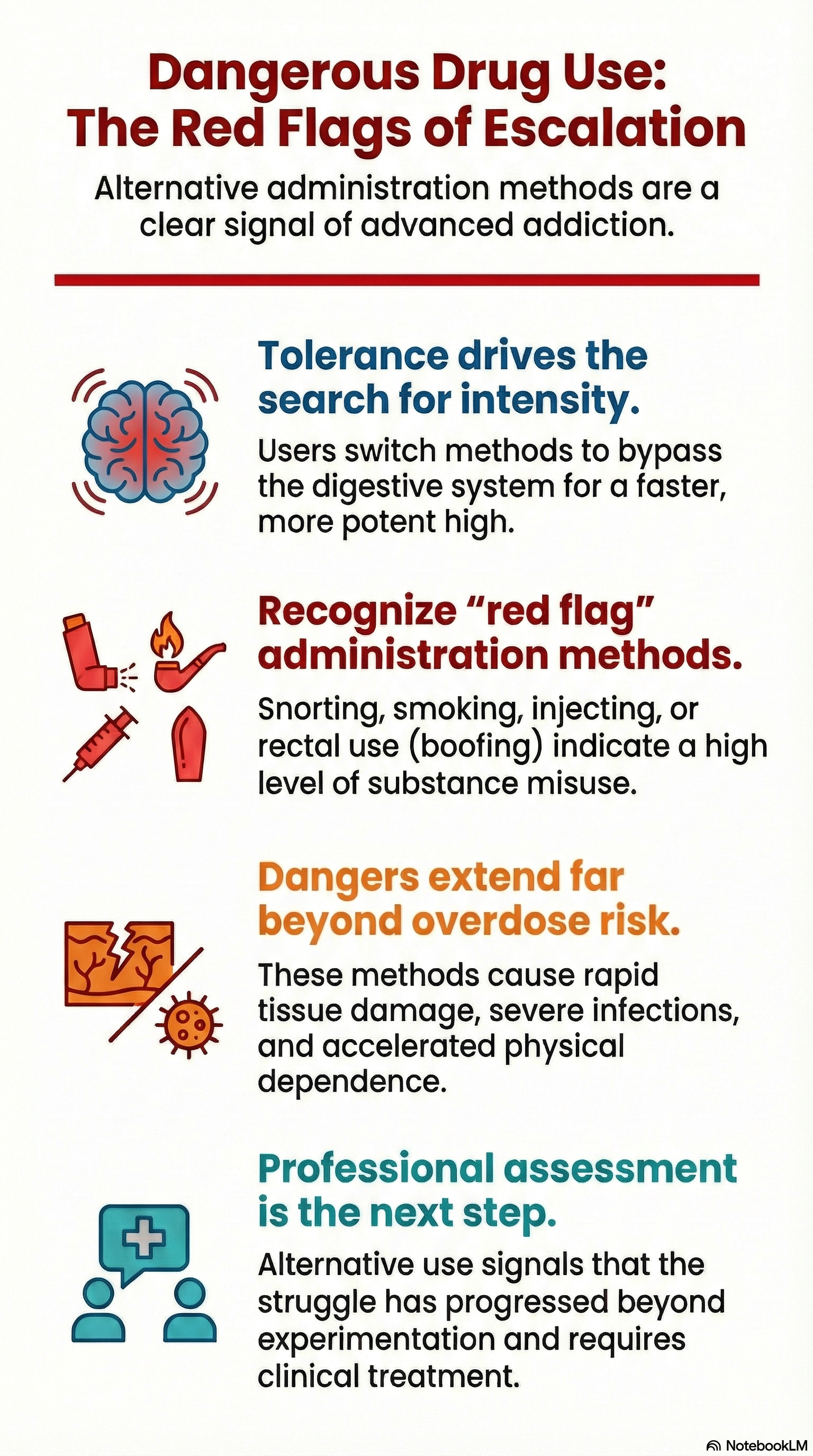
Tolerance and Escalation
The human body is remarkably adaptive. When someone uses a substance like an opioid or a stimulant regularly, the brain begins to adjust to its presence. This is known as tolerance. Over time, the standard oral dose no longer produces the same effect, leading the individual to increase the amount they take.
When increasing the oral dose becomes insufficient, the individual may look for ways to make the drug enter the bloodstream more quickly. By changing the administration method, they can achieve a higher peak concentration of the drug in the brain without necessarily increasing the pill count. This escalation often marks the transition from recreational use to a severe substance use disorder.
Attempts to Intensify Effects
Alternative methods are often chosen because they provide a “rush”—a near-immediate onset of euphoria that oral ingestion cannot replicate. Bypassing the digestive system means the drug does not have to be metabolized by the liver before entering general circulation. This “first-pass metabolism” usually breaks down a portion of the drug; avoiding it results in a more potent, albeit more dangerous, experience.
Methods That Signal Serious Risk
If you find evidence of the following methods, it is an indication that the individual is at a high risk for overdose and serious medical complications. These behaviors suggest that the user is prioritizing the speed of the drug’s effect over their own physical safety.
Rectal Administration (Boofing/Plugging)
Rectal drug administration, often referred to as “boofing” or “plugging,” involves dissolving a drug in water and administering it using a syringe without a needle. The rectal lining is thin and highly vascularized, allowing the drug to enter the bloodstream almost immediately.
This method is particularly dangerous because the individual has no way to “purge” the drug if they take too much. Unlike oral ingestion, where the body might induce vomiting as a defense mechanism, rectal administration offers no such safety net. This significantly increases the risk of a fatal overdose, especially with potent stimulants or synthetic opioids.
Injection and Intravenous Use
Perhaps the most significant red flag for loved ones. This involves dissolving a pill or powder and injecting it into a vein or muscle under the skin. It provides the most immediate “rush” possible.
Evidence of this method includes syringes, burnt spoons, small pieces of cotton, or elastic bands used as tourniquets. Beyond the risk of overdose, injection introduces foreign particles and bacteria directly into the bloodstream, which can lead to catastrophic internal infections.
Smoking Prescription Medications
Some individuals attempt to smoke or vaporize prescription pills by crushing them and heating them on aluminum foil, often referred to as “chasing the dragon.” The vapors are inhaled through a straw or glass pipe. This method sends the drug from the lungs to the brain in seconds.
Smoking pills is incredibly dangerous because medications contain binders and fillers not meant for inhalation. These substances can also cause lung inflammation, chemical pneumonia, and permanent respiratory damage.
Insufflation (Snorting)
Snorting, or insufflation, involves crushing a pill into a fine powder and inhaling it through the nose. The drug is absorbed through the mucous membranes. While some may perceive this as less “hardcore” than injection, it still bypasses the body’s natural filters and leads to rapid addiction.
Signs of snorting include frequent nosebleeds, a chronically runny nose, and the presence of small straws, rolled-up paper, or razor blades used to prepare the substance.
Medical Dangers Beyond Overdose
While a fatal overdose is the most immediate threat, these dangerous drug use methods cause systemic damage that can be irreversible. Bypassing the intended route of administration introduces risks that the medication’s original safety profile never accounted for.
Infection and Tissue Damage
Alternative methods often cause severe localized and systemic infections. Snorting can lead to a perforated septum, where the wall between the nostrils collapses. Injection can cause abscesses, cellulitis, and endocarditis—a life-threatening infection of the heart valves. Rectal use can cause permanent damage to the delicate tissues of the lower gastrointestinal tract, leading to chronic pain or internal bleeding.
Accelerated Tolerance
Using drugs in these ways causes “spikes” in brain chemistry that the organ was never meant to handle. This accelerates the development of tolerance at an alarming rate. As the brain becomes accustomed to these massive, rapid surges of dopamine or opioids, the individual’s ability to feel pleasure from normal activities vanishes, deeply entrenching the cycle of addiction.
If someone you care about is using prescription drugs in ways they weren’t intended, it’s a sign their use has progressed beyond experimentation. A confidential assessment can help you understand what level of care makes sense—call The Bluffs to speak with an admissions specialist.
What These Behaviors Tell You About Progression
When an individual moves from swallowing a pill to snorting, smoking, or boofing, they are no longer using the drug for its intended purpose. This shift indicates that the person is likely experiencing significant cravings and withdrawal symptoms that they are trying to stay ahead of.
These behaviors are often a cry for help, even if the individual is in deep denial. They signal that the substance has hijacked the brain’s survival circuitry. For families in Ohio, recognizing these signs of drug misuse is the first step in moving toward a professional intervention.
Finding Treatment for Prescription Drug Misuse in Ohio
Recovery from advanced substance use disorders requires more than just willpower. It requires a clinically supervised environment where the individual can safely detox and begin the work of psychological healing. In Ohio, residential treatment provides the highest level of success for those using alternative administration methods.
The Bluffs Approach
Our facility in Sherrodsville, Ohio, provides a comprehensive inpatient treatment program. We address the physical damage caused by dangerous drug use methods while using evidence-based therapies like Cognitive Behavioral Therapy (CBT) to address the roots of the addiction. We focus on the whole person, ensuring that co-occurring mental health issues are treated simultaneously.
Ohio Resources and Support
Families in the Buckeye State can access various resources to help navigate this crisis:
- Ohio CareLine: A 24/7 confidential emotional support line at 1-800-720-9616.
- Ohio Crisis Text Line: Text “4HOPE” to 741741 for immediate assistance.
- County ADAMH Boards: Ohio’s Boards of Alcohol, Drug Addiction, and Mental Health Services provide local referrals and community support.
- Ohio Department of Medicaid: Information on coverage for addiction services.
Quality Checklist: Evaluating a Treatment Center
When your loved one is using drugs in dangerous ways, you need a program that offers:
- Medical Detox: 24/7 monitoring to manage complex withdrawal symptoms.
- Dual Diagnosis: Integrated care for addiction and mental health.
- Accreditation: Licensure from the Ohio Department of Mental Health and Addiction Services.
- Aftercare Planning: A clear roadmap for long-term sobriety after residential care.
Why Choose The Bluffs
The Bluffs treats prescription stimulant and opioid use disorders in a residential setting where clients can step away from triggers and build the skills recovery requires. We serve professionals and families from Cleveland, Columbus, Akron, and Pittsburgh. Our 80-acre campus provides the serenity and clinical intensity necessary to address even the most progressed cases of substance misuse.
Our Location
We are located at:
The Bluffs
2650 Lodge Rd SW
Sherrodsville, OH 44675
While many of our clients come from major hubs like Columbus or Cleveland, they choose our Carroll County location because it offers the privacy and distance needed to focus entirely on healing.
Frequently Asked Questions
1. Why would someone use drugs rectally instead of swallowing them? This method bypasses the digestive system and liver metabolism, leading to a faster and more intense effect. It is often a sign that oral doses are no longer providing the desired results due to tolerance.
2. What are the signs that prescription drug use has become dangerous? Signs include using the drug in ways other than prescribed (snorting, smoking, etc.), needing higher doses, experiencing withdrawal, and neglecting responsibilities.
3. Is boofing more dangerous than other methods of drug use? Yes, because the drug enters the bloodstream almost immediately and the body cannot vomit to purge excess amounts, the risk of a fatal overdose is extremely high.
4. Can you overdose from boofing Adderall or other stimulants? Absolutely. Stimulants administered rectally can cause heart attacks, strokes, and seizures due to the rapid spike in blood concentration.
5. How do I talk to someone about dangerous drug use without pushing them away? Focus on “I” statements and express concern for their safety rather than judging their character. Using a professional interventionist can also help facilitate a productive conversation.
6. What kind of treatment does someone need for prescription stimulant addiction? Most require medically supervised detox followed by a residential program that includes behavioral therapies and dual-diagnosis support.
7. Does insurance cover residential treatment for prescription drug misuse? Most private insurance and Ohio Medicaid plans provide coverage for residential addiction services under mental health parity laws.
8. How long does treatment for stimulant use disorder typically last? While programs vary, evidence suggests that a stay of 30 to 90 days provides the best foundation for long-term recovery.
How To Start
If you have discovered evidence of dangerous drug use, do not wait for the situation to resolve itself. Contact us today to learn whether our program is the right fit.
- Call Admissions: 330-919-9228
- Verify Insurance: Secure Online Form
- Contact Us: Confidential Message Portal
If you are witnessing an overdose or a medical emergency, call 911 immediately. For immediate emotional support, call or text the 988 Suicide & Crisis Lifeline at 988.